Camera release
Canon EOS R50 V: an APS-C body designed around video
The Canon EOS R50 V changes the controls and connections of a compact APS-C body for video creation. Its workflow matters more than the V badge alone.
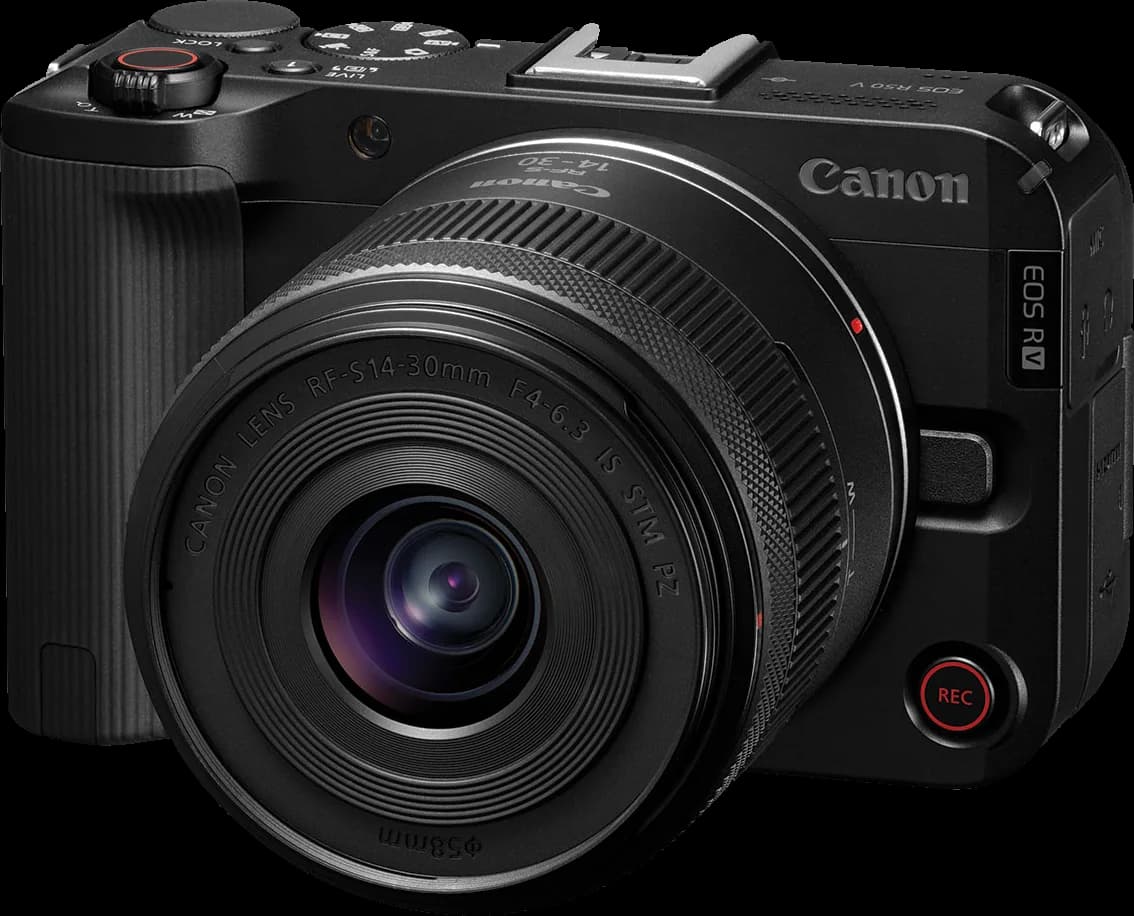
The controls reveal the intended workflow
Canon announced the EOS R50 V on March 26, 2025 as part of its video-oriented V series. The body uses an APS-C sensor and DIGIC X processor, but its most distinctive changes concern operation: a livestream button, a front recording button and a second tripod socket for vertical shooting.
Those details target creators who work alone, switch orientation often or need to start recording while facing the camera. They do not improve image quality by themselves, but they can remove friction from a repeated production routine.
Recording options need context
Canon lists cropped 4K recording at 60 frames per second with 10-bit 4:2:2 color, alongside Canon Log 3 and other video-oriented controls. A crop narrows the field of view, so lens choice matters when recording yourself at arm's length or working in a small room. Ten-bit recording and Log can preserve more flexibility for color work, while requiring a compatible editing workflow and more storage.
The EOS R50 V uses Dual Pixel CMOS AF II and includes subject detection. Autofocus can reduce the burden on a solo operator, but reliability still depends on the selected mode, subject, lens and scene.
Livestreaming is a system, not one checkbox
The official announcement names four connection methods: UVC/UAC, HDMI, Camera Connect and Live Switcher Mobile multi-camera. These options cover different levels of production, from a direct computer connection to a switched mobile setup. Before buying, check the required cable, capture hardware, software, power arrangement and output limits for the intended platform.
Compatibility with the RF-S 14-30mm power-zoom lens also supports smooth focal-length changes. That pairing may be useful for a creator-focused kit, but it should not hide the broader RF lens cost and range considerations.
Who benefits most?
The R50 V makes the most sense when vertical mounting, front-accessible recording, livestreaming and compact video operation are recurring needs. A photographer who primarily wants an eye-level viewfinder, extensive physical controls or stills-focused handling should compare alternatives rather than assume that every compact APS-C body serves the same purpose.
Open the EOS R50 V camera sheet for the complete sourced specification, then describe the actual production in the smart assistant. The useful question is not whether the camera is labelled for creators, but whether its controls and recording limits match the way you work.