Camera release
Nikon Z5II: the full-frame upgrade explained
The Nikon Z5II brings EXPEED 7 processing, broader subject detection and stronger stabilization to Nikon's accessible full-frame line. Here is the practical reading.
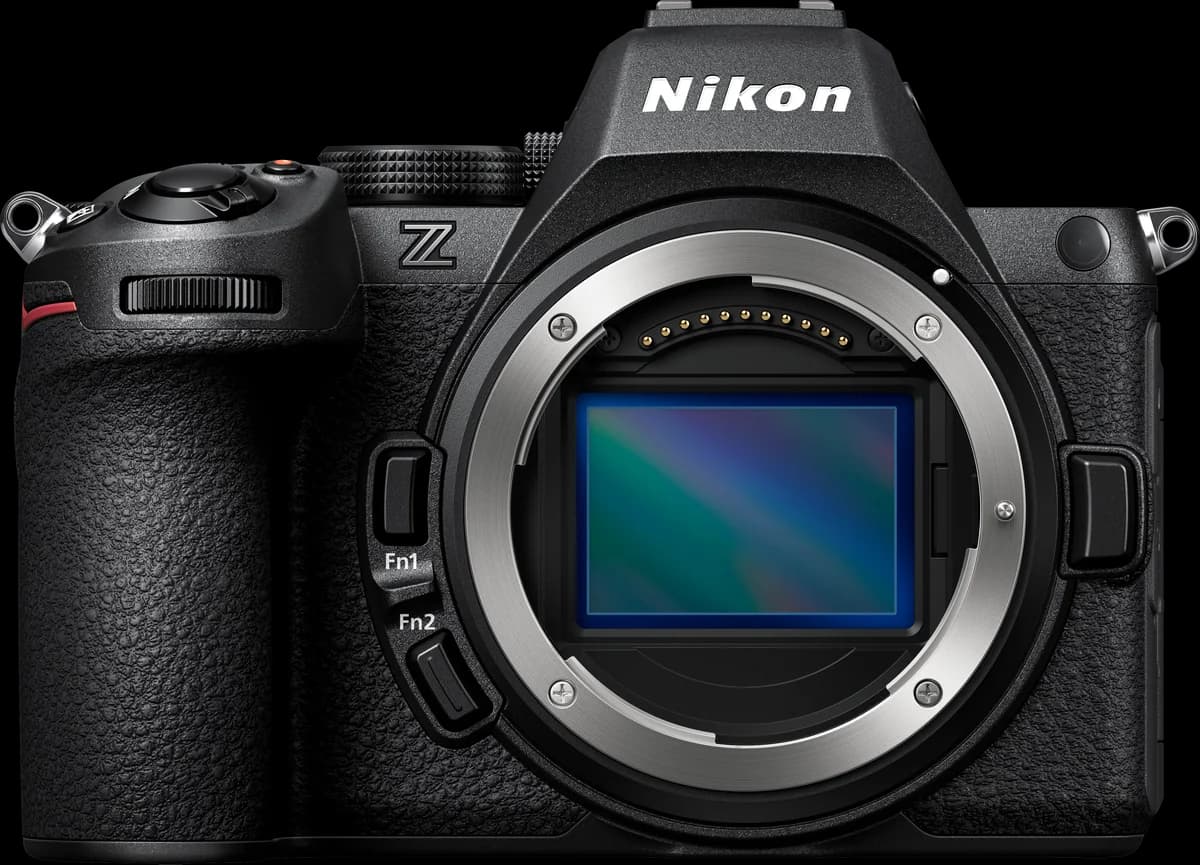
Higher-end processing reaches the Z5 line
Nikon announced the Z5II on April 3, 2025. The full-frame body uses the EXPEED 7 processor also found in the Z8 and Z9. A shared processor does not make the cameras identical, but it allows Nikon to bring newer autofocus, subject recognition and image-processing functions into a more accessible line.
Nikon says the Z5II can detect nine subject types in stills and video. It also adds 3D tracking and AF-A, a still-photo mode that switches between single and continuous autofocus as the subject changes. These functions are especially relevant when movement is unpredictable and the photographer wants to spend less time changing focus modes.
Read autofocus claims with their conditions
The official announcement states that focusing can take approximately one third of the time required by the original Z5. That comparison was measured under a specific Nikon test setup, so it should be read as evidence of a generational improvement rather than a universal ratio for every scene.
Nikon also gives a low-light autofocus limit of -10 EV under stated conditions and a maximum standard sensitivity of ISO 64,000 for stills. Those figures point toward stronger low-light operation, but actual results still depend on the lens, subject contrast, shutter speed and acceptable noise level.
Stabilization and video broaden the use cases
The five-axis in-body stabilization is rated at up to 7.5 stops at the center and 6 stops near the edges with the lens and CIPA 2024 conditions specified by Nikon. Focus-point VR is intended to improve correction around an off-center focus point with compatible non-VR Z lenses.
For video, the Z5II can record N-RAW internally to an SD card in the supported modes and offers N-Log. These options provide more room for an advanced post-production workflow, but they also increase storage, media-speed and processing demands.
A more capable starting point, not an automatic choice
The Z5II's combination of full-frame capture, stabilization, newer autofocus and internal RAW video makes it relevant to hybrid users who would otherwise need to step further up the range. It is still important to compare burst behavior, video crops, battery endurance, card configuration, body size and lens cost for the intended project.
Review the sourced values on the Nikon Z5II camera sheet, then use the smart assistant to weight those characteristics according to your real use. The processor name is useful context; the complete set of trade-offs should make the decision.